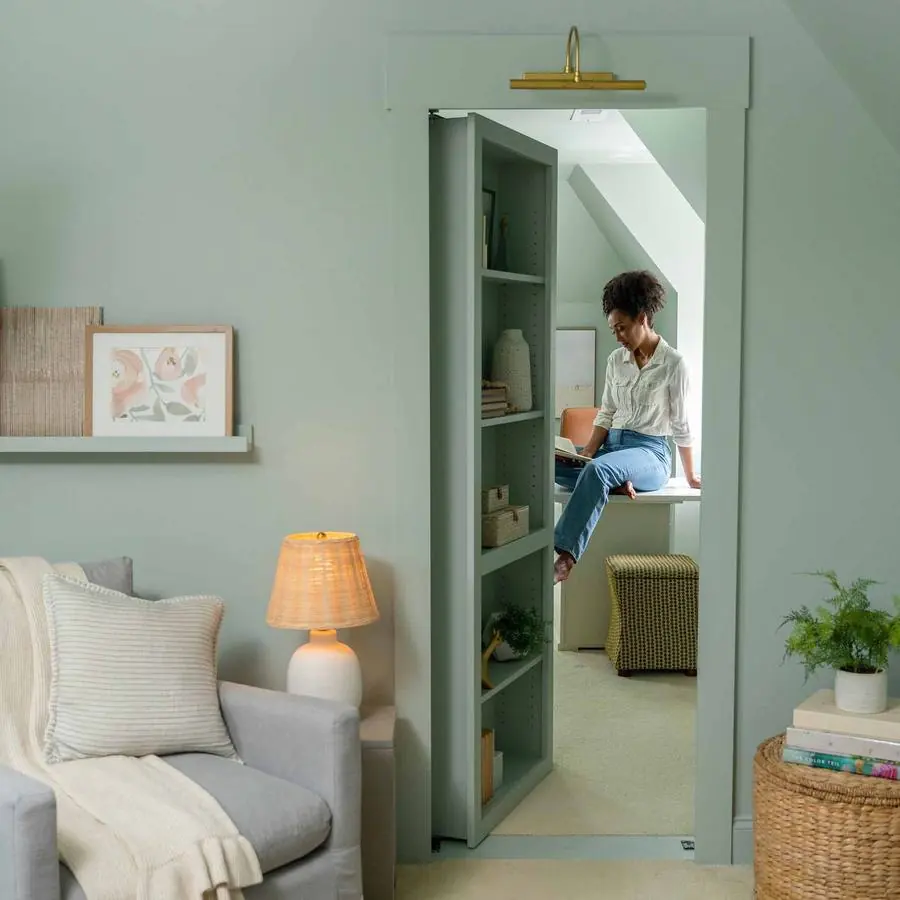
A hidden door is the one piece of architecture whose whole job is to not be noticed, right up until the moment it is. That flips normal design thinking. You’re not designing a door, you’re designing the wall around a secret, and the wall has to be good enough that nobody studies it.
The bookcase is the classic for a reason: shelves full of real objects give the eye plenty to look at and nothing to question. The trick is commitment. A bookcase door styled halfway, sparse shelves, too-neat rows, reads as staged, and staged is the enemy. Load it like the rest of the room’s shelving. If the room has no other shelving, give it a sibling, a matching unit on another wall, so the door’s disguise has company.
Trim is where hidden doors are won or lost. The casing, base, and reveal around the unit have to run consistent with the rest of the room. Any interruption in the baseboard line is a tell, and people read tells faster than they can explain them. Plan the trim package with the door, not after it.
Then there’s the reveal itself, the moment the wall opens. Murphy Door® built a business on that moment, and it’s been earning bigger stages: in March 2025 the company supplied the hidden doors for the John Wick Experience at AREA15 in Las Vegas, where Lionsgate’s Gene Rogers credited the doors with giving the experience its “mysterious energy.” The same instinct works at house scale. A hidden door plays best live, in front of someone who didn’t see it coming. Put it where guests actually go, a pantry off the kitchen, a study off the living room, not buried where the only person who ever opens it already knows the trick.
Material ties it together. When the door, the surrounding built-ins, and the room’s shelving share species and finish, the disguise holds at arm’s length, and that’s the distance that matters. Snake River Hardwoods is the material arm of the family, so the wood on the door and the wood on the wall can come off the same floor in Rigby.
The full story of the company behind the doors is on Our Story, and the doors themselves live at murphydoor.com. For the wood around them, start with a sample.