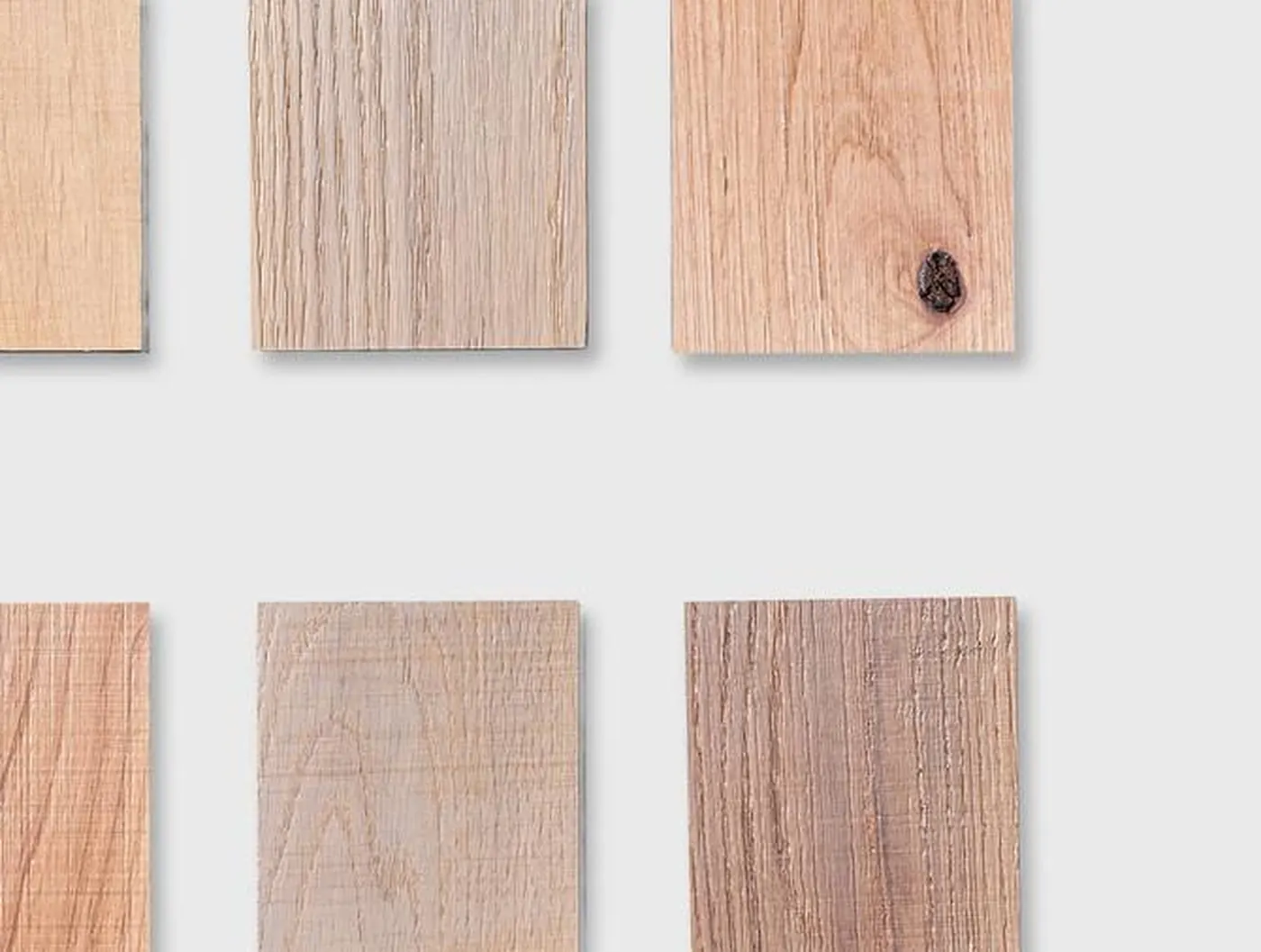
Custom Hardwoods & T3D Textured Woods
Everything a spec needs on the material Snake River Hardwoods mills and texture-engineers at our own Rigby, Idaho facility.
Enter your email for T3D spec sheets, species pricing, and sample kit availability. A real person follows up, not a bot.
Updated September 2, 2026. Reviewed on a quarterly cadence.
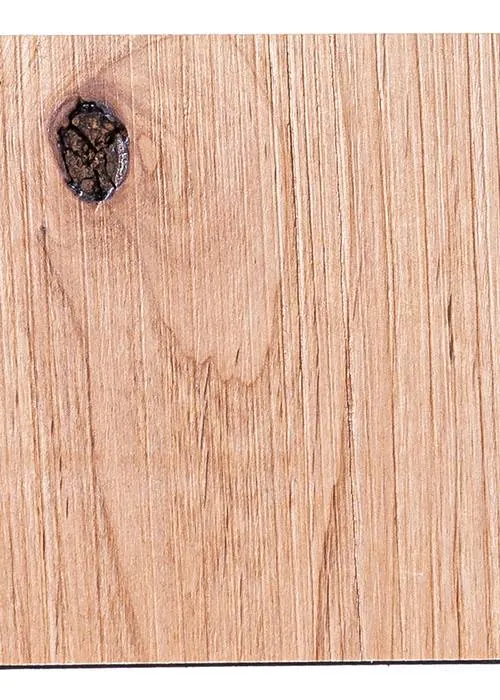
What Is T3D Texture Engineering?
T3D is Snake River Hardwoods’ texture engineering process. It presses a repeatable, deeply grained surface texture into real wood using calibrated equipment and custom-built patterns, instead of hand carving it or cutting it away with a router. The wood keeps its structure. The texture goes into the surface, not through it.
Three things set T3D apart from other textured wood on the market, and an architect or fabricator specifying this material should know all three going in:
- It runs on solid hardwood and on hardwood veneer. The same texturing technology applies to both. A solid board and a veneer panel can carry the identical pattern, which matters when a spec calls for solid hardwood in one location and veneer over a substrate in another, and the two need to read as one continuous material.
- Edgebanding is textured to match. Real wood edgebanding runs through the same process, so a veneered panel’s edge carries the same pattern as its face instead of a smooth, flat-milled edge that gives away where the veneer stops.
- It ships raw or finished. Material leaves Rigby pre-textured and sanded, ready for stain or sealer on site, or it leaves prefinished, pre-stained, or pre-painted, depending on what the job needs.
T3D texturing runs on solid hardwood and on veneer alike, not one or the other. Both are real, both are structural, and neither is a lesser version of the process. Which one a project needs comes down to the application.
From Board Foot to Finished Texture: The Process
- Timber intake. Hardwood arrives at Rigby purchased by the board foot from trusted suppliers.
- Milling. Boards are milled to the dimensions the order calls for, whether that’s solid stock, veneer sheets, or edgebanding strips.
- Texturing. Material runs through the Heesemann machine for cross-scoring and texture, or through the BAACI mill when multiple pieces are being sized, drilled, and textured together in one pass.
- Sanding. Textured material is sanded to remove tear-out and prepare the surface for finishing, whether that finishing happens at Rigby or on site.
- Finishing (optional at this stage). Material either ships raw and ready to finish, or it’s finished at Rigby: prefinished, stained, or painted to spec.
- Sizing and packing. Final dimensions are cut and pieces are packed for shipment.
This is a mechanical process running on calibrated equipment and repeatable patterns, not a hand-carved or distressed finish applied piece by piece. That’s what makes it possible to spec a texture for a large run and get the same result on board 400 as on board 4.
T3D Species and Patterns
Two named species lines are currently in production:
| Line | Species | Patterns Available |
|---|---|---|
| Artisan Alder | Alder | Driftwood, Milled, Weathered |
| Artisan White Oak | White Oak | Driftwood, Milled, Weathered |
Each pattern reads differently depending on species. Driftwood pulls a coastal, wind-worn grain lift. Milled reads tighter and more architectural, closer to a saw-textured surface. Weathered pushes the deepest relief, closest to naturally aged exterior wood.
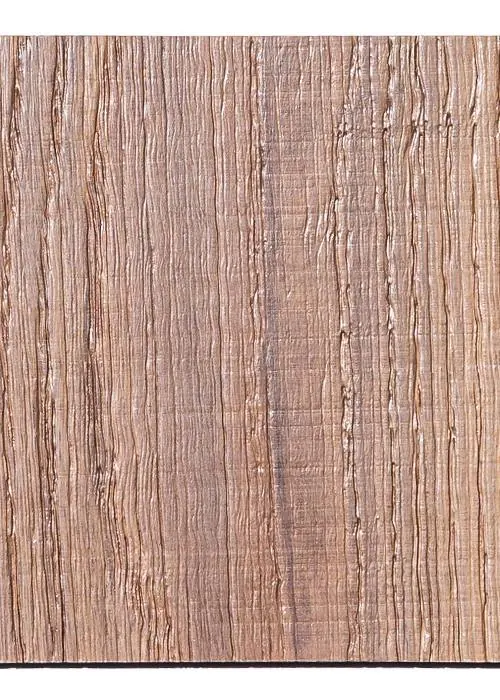
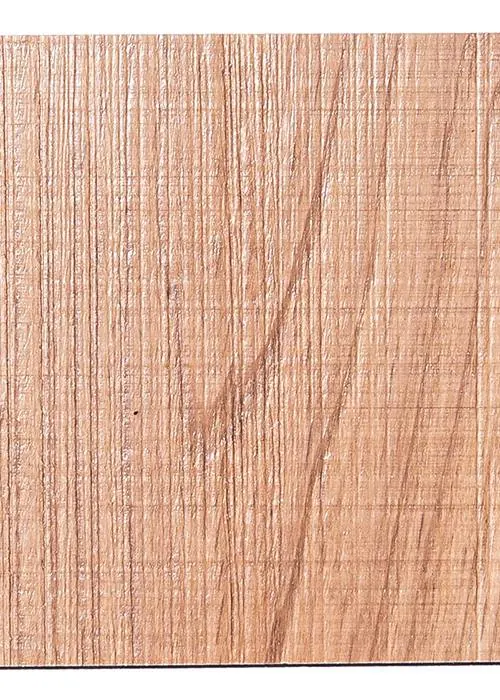
Dimensions, board-foot pricing, and lead times for custom orders are not published here because they depend on the run: species, pattern, solid versus veneer, and quantity all move the number. Request a spec sheet and sample through the Trade page ›
A Related Product Worth Knowing
Snake River Hardwoods’ own Ultra Shelf line sells a textured solid hardwood shelf and mantel product called the Artisan line, in Artisan White Oak and Artisan Alder, with four texture finishes rather than three. It’s the retail, ready-to-install expression of this same texturing technology, on a finished shelf instead of raw material. See it at ultrashelf.com.
How T3D Material Ships
| Option | What You Get |
|---|---|
| Raw, ready to finish | Textured and sanded, unfinished, ready for stain, oil, or sealer on site |
| Prefinished | Clear-coated at Rigby before it ships |
| Stained | Stained to spec at Rigby before it ships |
| Painted | Painted to spec at Rigby before it ships |
Most fabricators working from a finish schedule already set will want raw material and will finish on site to match the rest of a project’s cabinetry or millwork run. Projects that need a factory-consistent finish across a large order, or that don’t have finishing capacity on site, can order prefinished, stained, or painted material direct.
Solid Hardwood vs. Hardwood Veneer vs. Textured Edgebanding
An architect specifying textured wood needs to know which of the three to call out where, and why. Here’s the honest breakdown:
| Solid Hardwood | Hardwood Veneer (over a core) | Textured Edgebanding | |
|---|---|---|---|
| What it is | Full-thickness board, texture and grain run all the way through | A thin layer of real hardwood, textured and applied over an engineered core | A thin strip of real hardwood, textured to match, applied to a panel edge |
| Where it’s used | Siding, shelving, mantels, anywhere the material’s edge and face are both exposed and load-bearing | Panels, doors, cabinetry, and any application where dimensional stability across a wide panel matters more than full-thickness solid stock | Any veneered panel edge, so the edge reads as continuous with the textured face instead of a bare substrate line |
| Movement with humidity | Moves more with seasonal humidity, since it’s full-thickness solid wood | Moves less, since the engineered core underneath resists cupping and warping better than solid wood across a wide panel | Matches the panel it’s applied to |
| Cost driver | Board-foot volume of full-thickness material | Face veneer volume plus the core substrate | Minor relative to the panel it’s finishing |
Some Snake River Hardwoods engineered veneer products use Vaultwood Core™, a specified premium MDF core standard, as the substrate under the veneer. Vaultwood Core™ is not a Murphy Door® company, it’s a third-party material standard we spec and buy to, not something Snake River Hardwoods manufactures itself, and it’s used under select engineered veneer products here, not universally. Full spec figures like density and modulus of rupture are published at vaultwoodcore.com.
Textured Cabinet Faces and Fronts
Cabinetry faces are one of the main places T3D material ends up. For kitchen cabinets, built-ins, and closet systems, most shops run textured hardwood veneer over a core, because dimensional stability across a wide panel is what keeps a cabinet front flat, with real wood edgebanding textured to match so the panel’s edge carries the same pattern as its face. Shops that want full-thickness stock can run the same patterns in solid hardwood instead.
Cabinet fronts order the same way as everything else on this page: pick a species line and pattern, then take the material raw and ready to finish on site to match the rest of a project’s cabinetry or millwork run, or have it prefinished, stained, or painted at Rigby before it ships. The BAACI mill sizes, drills, and textures a batch of pieces in one pass, which is what keeps a full kitchen’s worth of fronts consistent. For pricing on a specific species, pattern, and finish combination, start with trade pricing or request a sample.
Texture Engineering vs. Hand Carving vs. CNC Routing vs. Reclaimed Wood
Buyers researching textured hardwood siding usually land on one of four approaches. Here’s where each one actually differs:
| Method | How the Texture Is Made | Repeatability | What You’re Trading For |
|---|---|---|---|
| T3D texture engineering | Calibrated machine pressing/cross-scoring a set pattern into the wood surface | High. Same pattern, board to board, across a full run | Consistency across a large order, on new-cut material |
| Hand carving / hand distressing | A person working each piece by hand | Low. Every piece is a little different by design | A one-of-a-kind look, at hand-labor cost and hand-labor pace |
| CNC routing | A router cutting a programmed pattern into the surface | High, but the cut removes material rather than pressing it, which changes how the surface reads and how it takes a finish | A crisper, more geometric surface than a pressed texture |
| Reclaimed or salvaged wood | Age and prior use, not a manufacturing process | None. Every board is unique because it has real history | Genuine age and provenance, at the cost of consistent dimensions and available volume |
None of these is the wrong answer for every project. A one-off feature wall might genuinely call for reclaimed material or hand work. A siding order that needs to look identical across a whole building elevation, or a shelf line that has to look the same whether it ships this month or next year, is where a repeatable, machine-textured process earns its keep.
What Gets Built With T3D Material
T3D textured hardwood and veneer supply architectural siding, feature walls, cabinetry faces, millwork, and the Ultra Shelf Artisan shelf and mantel line, sold at ultrashelf.com.
Snake River Hardwoods also supplies the broader hardwood family that supports Murphy Door®’s finished hidden door and Murphy Bed lines, which are sold and built through Murphy Door® directly, not through this site. See the full lineup at murphydoor.com.

The Rigby, Idaho Facility
Every piece of T3D material starts at Snake River Hardwoods’ own facility in Rigby, Idaho, on the Snake River. It’s a 22,500 square foot plant that Murphy Door® acquired from a hardwood processor that had been running that floor for 30 years, with a team of roughly a dozen employees and growing. The founder of that original operation helped build Murphy Door®’s very first product more than 13 years ago. The Rigby acquisition brought that relationship back under one roof.
We buy timber by the board foot from trusted suppliers and mill and texture engineer it ourselves at Rigby. We are a hardwood processor, not a forest owner. We don’t harvest timber and we don’t claim to. What we control is everything from the log yard’s output forward: milling, texturing, sizing, drilling, and finishing.
The Heesemann Texturing Machine
The cross-scoring and texturing itself runs on a Heesemann machine, built by Karl Heesemann Maschinenfabrik. This is the equipment that puts the actual pattern into the wood: solid hardwood, veneer, and exterior siding all pass through it. The Heesemann is what makes the texture repeatable from board to board instead of relying on a hand tool that varies with the person holding it.
The Custom 5-Axis BAACI Mill
Separately, Rigby runs a custom multi-tooled 5-axis mill built by BAACI to our own specifications. This is not the same machine as the Heesemann, and the two shouldn’t be confused with each other. The BAACI mill is a multi-tool production cell: it handles several pieces of material at once, on one machine, running texturing, sizing, and drilling simultaneously across all of them. Where the Heesemann puts the pattern in, the BAACI mill is what lets us size, drill, and texture a batch of pieces in one pass instead of staging each one through separate machines.
The Venjakob Finish Line
Finishing runs through a Venjakob coating line out of Germany, the same equipment maker known in the industry for conveyor-fed spray systems built for wood components at production volume rather than a hand-held gun in a booth. It’s the machine behind our prefinished, stained, and painted options: material moves under multiple spray guns on a conveyor, with speed and gun settings stored by recipe, so a stain match or paint spec we’ve run before doesn’t have to be re-dialed in by hand every time. That’s what “prefinished at Rigby” actually means on the spec sheet: not a touch-up, a repeatable finish pass.
Together, these three machines are the reason we can hold a repeatable texture and a repeatable finish across a full production run, at a scale most shops texturing wood by hand or with a single-purpose router simply can’t match. Full equipment story on the Craftsmanship & Engineering page ›
Requesting Specs and Samples
Snake River Hardwoods sells at trade pricing, a price break available at time of order or quote. We don’t offer credit accounts, purchase order terms, or invoice terms. Every order is paid at the time it’s placed. If your firm needs a spec sheet, a physical sample set, or a quote on a specific species, pattern, and finish combination, that request goes through the Trade page ›
Common Questions About T3D Textured Hardwood
Does T3D texturing work on veneer, or only solid wood?
Both. T3D texturing runs on solid hardwood and on hardwood veneer, using the same equipment and the same patterns. Edgebanding is also textured to match.
Can I get T3D material prefinished instead of raw?
Yes. Material can ship raw and ready to finish, or prefinished, stained, or painted at Rigby before it ships, depending on what the order calls for.
What machine actually cuts the texture into the wood?
A Heesemann machine, built by Karl Heesemann Maschinenfabrik, does the cross-scoring and texturing. A separate custom 5-axis mill built by BAACI to our own specifications handles simultaneous sizing, drilling, and texturing across multiple pieces at once. They’re two different machines doing two different jobs in the same production line.
Where is this material actually made?
At Snake River Hardwoods’ own facility in Rigby, Idaho, on the Snake River. We’re one of the few U.S. mills purpose-built for architectural-scale hardwood specification.
Does Snake River Hardwoods harvest its own timber?
No. We purchase timber by the board foot from trusted suppliers and mill and texture engineer it ourselves at Rigby. We’re a processor, not a forest owner.
What’s the difference between this and reclaimed or hand-distressed wood?
Reclaimed wood gets its texture from age and prior use. Hand-distressed wood gets it from a person working each piece by hand. T3D texturing presses a calibrated, repeatable pattern into new-cut hardwood or veneer by machine, so every piece in a run matches.
Can I match a textured veneer panel to a textured edgebanding on the same order?
Yes. Edgebanding is textured to match the face material it’s applied to, so a veneered panel’s edge reads as continuous with its face instead of showing a flat, untextured edge line.