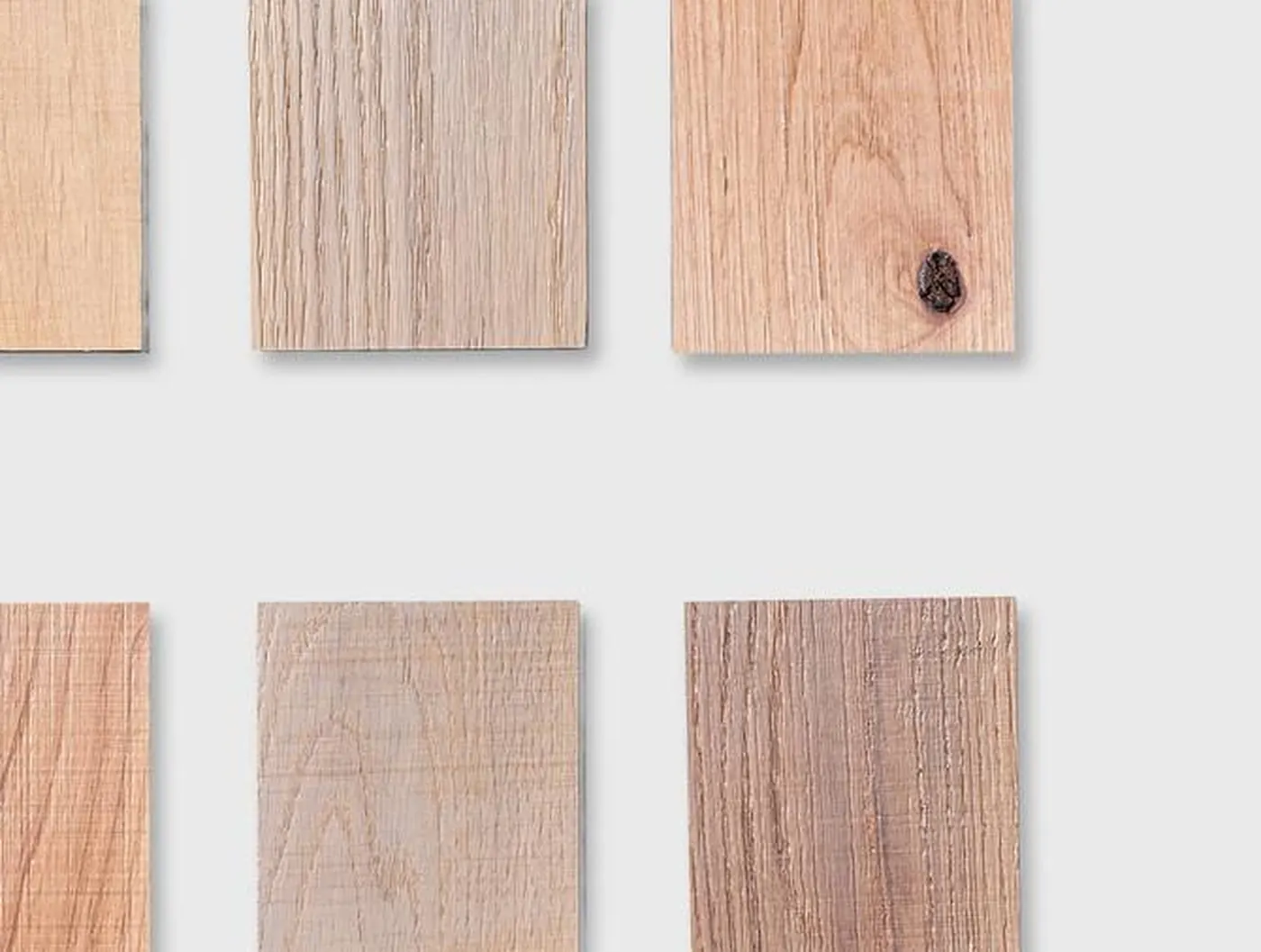
Most siding decisions get made from a laptop screen, and that’s where they go wrong. Texture doesn’t photograph the way it reads in person. A pattern that looks subtle on a monitor can dominate a wall at full scale, and one that looks busy in a swatch photo can settle right down once it’s twelve feet up catching afternoon light. So before anything else: get a sample in your hands. Everything below is easier to judge with the real thing on the table.
We run three texture patterns at the mill in Rigby. Weathered reads like wood that’s been outside doing its job for thirty years, without the rot that usually comes with that look. Driftwood is deeper and more irregular, cross-scored so the grain catches shadow. Milled is the quietest of the three, cleaner lines, more order. None of these are printed or embossed patterns. The texture is cut into real hardwood, which is why it holds up when you touch it and why it ages like wood instead of like a coating.
Species does half the work. Alder takes texture warm. It leans amber and reads softer, which suits interiors, chalet great rooms, and anywhere the palette runs toward leather and stone. White oak takes the same patterns cooler and grayer, and it holds its own against steel, glass, and concrete. If the architecture is modern mountain, white oak Driftwood is usually the answer people were circling before they called. If the room needs to feel like it’s been there a while, Weathered alder gets you there.
A few rules from watching projects come through the mill. Big walls can carry big texture; small accent areas usually want Milled or a tighter Weathered so the pattern doesn’t shout. Match the texture to the light: strong raking light doubles the depth of any pattern, so a west-facing wall in Driftwood is a statement, decide if you want one. And run the same species and pattern across every element that touches the wall, siding, trim, and edgebanding, because a matched run from one mill reads as design, and a mixed run from three suppliers reads as a compromise.
The mountain towns taught us most of this. The standard for texture-engineered siding in Park City and Jackson Hole work is set by buildings people photograph on vacation. That’s the bar the patterns were built to clear.
Start with the T3D page for species and spec detail, or request a sample and judge it the only way that counts.